






Resources
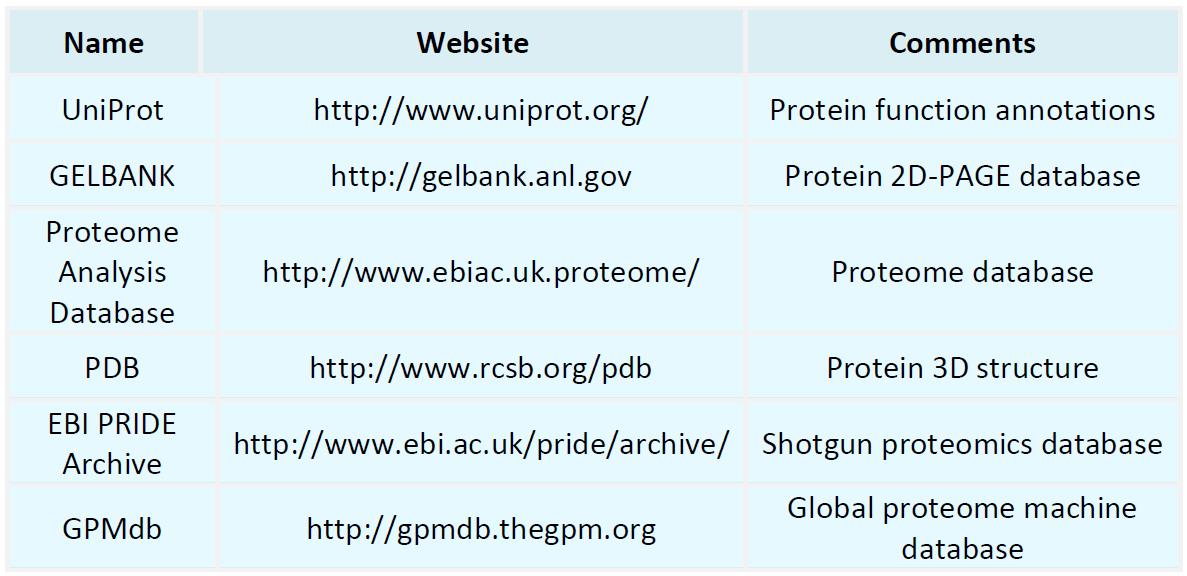
Proteomics Databases
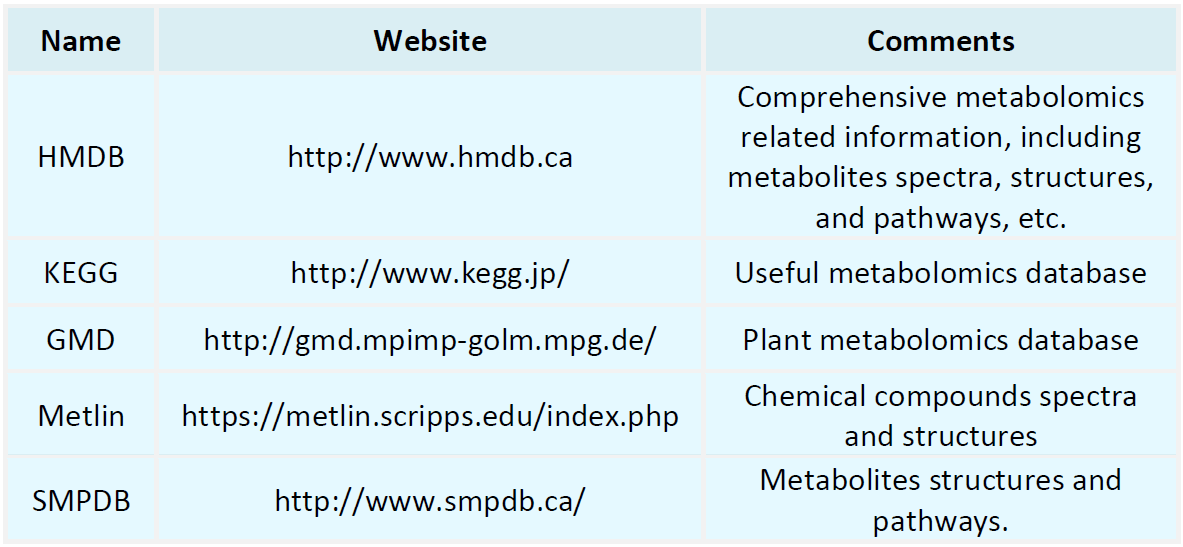
Metabolomics Databases
-
• Proteomic Analysis of Exosomes
Proteomic analysis of exosomes is an integral technique in contemporary biomedical research, aimed at comprehensively characterizing the types and functions of proteins within exosomes. Exosomes are small vesicles, 30-150 nanometers in diameter, secreted by cells. They facilitate the intercellular and fluid-based transfer of biomolecules, including proteins, lipids, and nucleic acids. Playing pivotal roles in cell communication, waste removal, and immune response regulation, exosomes are crucial for u......
-
Proteomics LC-MS/MS analysis is a powerful tool for comprehensive protein profiling and identification in biological samples. LC-MS/MS, which stands for liquid chromatography-tandem mass spectrometry, enables the separation, detection, and characterization of complex protein mixtures. This technique provides critical insights into protein identification, quantification, and post-translational modifications, playing a pivotal role in elucidating protein function, cellular signaling pathways, and diseas......
-
• Protein Thermal Stability Assay
The protein thermal stability assay is a critical method for examining the structural and functional resilience of proteins under conditions of thermal denaturation. This technique involves applying heat to assess structural changes in proteins, thereby evaluating how different temperatures influence their stability. Protein thermal stability is defined as the capacity of a protein to preserve its native conformation and function at elevated temperatures. This assay is extensively employed in drug dev......
-
• Proteomics Bottom-up & Top-down
Proteomics bottom-up & top-down approaches are two fundamental strategies in modern life sciences, primarily used to investigate the composition and functional properties of proteins in biological samples. Bottom-up proteomics involves enzymatic digestion of proteins into peptides, followed by mass spectrometry (MS) analysis to reconstruct protein-level information. In contrast, top-down proteomics directly analyzes intact proteins via MS without enzymatic digestion, thereby preserving post-translatio......
-
• Proteome Analysis by Mass Spectrometry
Proteome analysis by mass spectrometry is a powerful technique for investigating the composition, structure, function, and interactions of proteins in biological samples. As essential biomolecules, proteins participate in nearly all biological processes, including cellular architecture, signal transduction, metabolic regulation, and immune responses. By fractionating complex protein mixtures and performing qualitative and quantitative analyses, this approach enables a comprehensive understanding of ce......
-
Protein stability analysis is a scientific approach used to evaluate a protein’s ability to retain its structural integrity and functionality under varying environmental conditions. As essential biomolecules, proteins not only provide structural support to cells and tissues but also function as enzymes, signaling molecules, and transport carriers in biochemical processes. Protein stability analysis has broad applications across drug development, industrial enzyme engineering, food science, and fundame......
-
MS/MS Proteomics, or tandem mass spectrometry proteomics, is an advanced analytical technique used to explore the protein composition and structure of biological samples in depth. By fragmenting proteins into peptide sequences, mass spectrometry enables the identification and quantification of proteins. This method is indispensable in biological and medical research because proteins are integral to cellular functions. Understanding how protein expression changes under various biological states and con......
-
• Flow Cytometry Protein Quantification
Flow cytometry protein quantification is a high-throughput analytical technique grounded in flow cytometry, enabling precise measurement of target protein expression at the single-cell level. This method uses fluorescently labeled antibodies that bind specifically to target proteins, with a flow cytometer detecting the intensity of the fluorescence signals to quantify protein expression within a cell population. Unlike traditional protein quantification methods such as Western blot or ELISA, flow cyto......
-
Global proteomic analysis is a proteomics approach that systematically investigates all proteins within an organism, focusing on their composition and changes in expression. Unlike traditional methods that analyze one or a few proteins, global proteomics provides a comprehensive view of proteomic features under varying physiological or pathological conditions. This approach aids researchers in understanding complex cellular functions, signaling pathways, and protein interactions. The central aspect of......
-
ESI proteomics is a method in proteomics research that leverages ESI technology. This technique involves using a high-voltage electric field to transform protein solutions into charged microdroplets. These droplets convert into gas-phase ions upon desolvation, facilitating efficient ionization and mass spectrometric analysis of proteins and peptides. As a "soft ionization" technology, ESI excels in preserving the structural integrity of macromolecules like proteins, while offering high sensitivity in ......
How to order?




